

Before ordering a shipping container, it is important to check more than the space needed for the container itself.
The delivery vehicle needs enough room to reach the site, manoeuvre and safely unload the unit. You also need suitable lifting clearance and firm ground capable of supporting the vehicle and container.
The exact shipping container delivery space depends on the container size, delivery vehicle, site layout and where you want the unit positioned.
Unit Group’s transport guidelines provide detailed information about the vehicles used and the access customers should prepare before delivery.
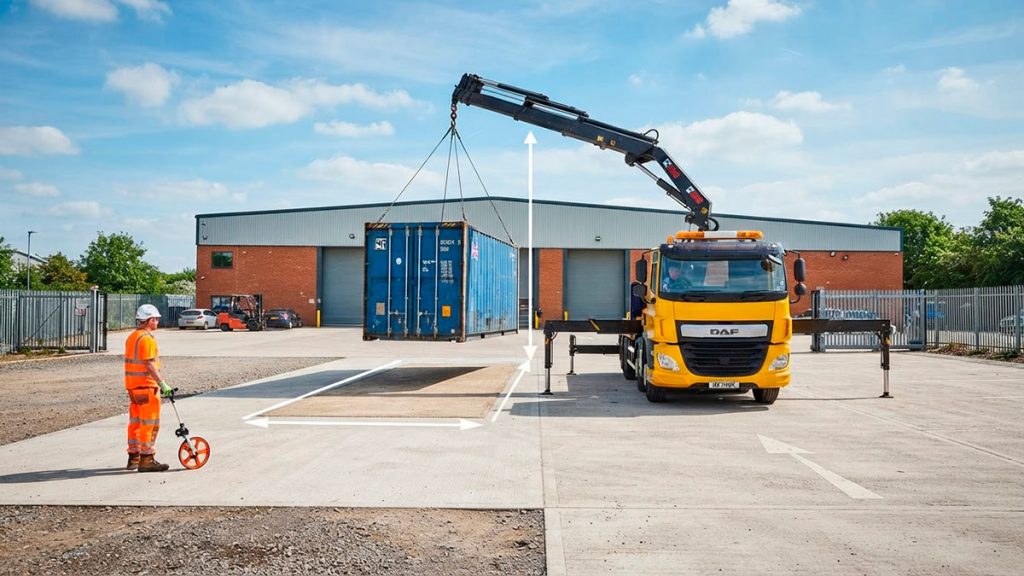
How Much Space Does a Shipping Container Delivery Lorry Need?
The vehicle required depends partly on the size of the container.
For deliveries and collections of 8ft, 10ft and 20ft containers, Unit Group commonly uses a rigid HIAB lorry measuring approximately:
- 38ft long
- 9ft wide
- 14ft high
A 40ft container requires a larger articulated HIAB vehicle measuring approximately:
- 63ft long
- 9ft wide
- 14ft high
These measurements are for the vehicles themselves. Additional room may be required for manoeuvring, deploying stabiliser legs and lifting the container into position.
A site with enough room for a 20ft or 40ft container is not automatically large enough for the vehicle delivering it.
Allow Space for the HIAB Stabiliser Legs
HIAB vehicles use stabiliser legs during lifting to keep the vehicle secure.
According to Unit Group’s current transport guidance, stabiliser legs can extend up to 10ft from each side of the vehicle.
This is an important part of calculating your container delivery requirements.
A narrow yard may appear accessible when looking only at the lorry width, but walls, fences, parked vehicles or other containers could prevent the stabilisers from being deployed safely.
Before delivery, check the width of the unloading area rather than just the entrance.
How Much Overhead Clearance Is Needed?
Shipping containers are normally lifted from the vehicle using a crane. This means you need clear space above the unloading area.
Unit Group advises customers to check for overhead obstructions including:
- Power cables
- Telephone lines
- Tree branches
- Building overhangs
- Roof structures
- Street lighting
- Scaffolding
You should also tell the transport team if the container needs to be lifted over a fence, wall, building or another container.
Never assume a crane can safely operate around overhead electrical cables. Any potential obstruction should be identified before the delivery is booked.
Check the Entire Route into Your Site
One of the easiest mistakes is measuring the final container position but forgetting about the route the lorry must take to reach it.
Walk or drive the proposed route and look for restrictions.
Measure Gates and Entrances
Check the width and height of gates, entrances and access roads.
Remember that a large lorry also needs room to turn. A gateway may be wide enough for the vehicle to pass through but still impossible to approach because of a tight corner.
Check for Parked Vehicles
Cars and vans can turn an accessible road into a difficult delivery route.
If your site is on an industrial estate, residential street or shared access road, consider whether parked vehicles could restrict the lorry on delivery day.
Consider Turning Space
The driver may need to reverse or turn the vehicle before or after unloading.
A 40ft container delivery can involve a vehicle approximately 63ft long, so turning requirements can be significant.
If access is tight, provide Unit Group with photographs and measurements before confirming the delivery.
What Ground Conditions Are Needed?
The delivery vehicle and shipping container both need suitable ground.
Firm, level surfaces such as concrete, tarmac or properly prepared hard-standing are generally easier for delivery than soft or uneven ground.
Wet grass, loose soil and unstable surfaces can cause problems for heavy vehicles, particularly after prolonged rain.
The final container position should also be reasonably level. An uneven container can make its cargo doors difficult to open and close.
Check for Drains and Underground Services
What is beneath the delivery area matters too.
Before the lorry arrives, identify:
- Manholes
- Drain covers
- Septic tanks
- Underground pipes
- Utility services
- Cellars or voids
- Other weak surfaces
Heavy delivery vehicles and stabiliser legs can place considerable pressure on the ground.
If you know about underground services or areas that cannot support heavy loads, tell the transport team before delivery.
How Much Space Does the Container Need Once Delivered?
You need slightly more space than the physical dimensions of the container if you want to use it comfortably.
A standard 20ft shipping container is approximately 20ft long and 8ft wide externally.
Do not position the doors directly against a wall, fence or other obstruction. Leave enough room for the doors to open fully and for people to load and unload items safely.
Think about how the area will operate after delivery too. Avoid blocking:
- Fire exits
- Pedestrian routes
- Vehicle access
- Loading bays
- Emergency access
- Other storage units
- Building entrances
The best position combines convenient access with enough space for safe delivery and future collection.
Does a 40ft Container Need More Delivery Space?
Yes. The container is twice the nominal length of a 20ft unit, and Unit Group’s guidance specifies an articulated HIAB lorry approximately 63ft long for 40ft container delivery.
A 40ft unit can provide substantial storage capacity, but you need to make sure the site can accommodate the delivery vehicle before ordering.
If access is limited, choosing a smaller container or multiple smaller units may sometimes be more practical.
Unit Group supplies shipping containers for hire and sale in a range of sizes, allowing the container to be matched to both storage requirements and available site space.
What Should You Do if Access Is Tight?
Do not wait until delivery day to find out whether the lorry will fit.
Measure the entrance and unloading area and take photographs showing:
- The approach road
- Site entrance
- Tight corners
- Overhead obstacles
- Proposed container position
- Nearby walls and fences
- Ground conditions
Send this information when discussing the delivery.
Unit Group’s recent guide, What Access Do You Need for a Shipping Container Delivery?, provides further advice on preparing restricted sites for delivery.
Remember That the Container Will Eventually Need Collecting
If you are hiring rather than buying, plan for collection from the start.
Avoid positioning new buildings, fencing, machinery or other containers in a way that prevents the delivery vehicle from returning to collect the unit.
Construction sites are particularly likely to change during a hire period. A clear access route when a project starts may be blocked several months later.
Site managers should keep the collection route in mind as work progresses.
Shipping Container Delivery Checklist
Before confirming delivery, check:
- Is the entrance wide and high enough?
- Can the lorry reach the unloading position?
- Is there enough room to turn or reverse?
- Is there room for the stabiliser legs?
- Are overhead cables and branches clear?
- Is the ground firm and level?
- Are there drains or underground services?
- Can the container doors open fully?
- Will the container block any access routes?
- Can the vehicle return for collection?
If you cannot answer one of these questions confidently, discuss it with Unit Group before booking.
Frequently Asked Questions
How wide is a shipping container delivery lorry?
Unit Group’s rigid and articulated HIAB vehicles are approximately 9ft wide. Extra width is required during unloading because stabiliser legs can extend up to 10ft from each side.
Can you deliver a container over a wall or fence?
This depends on the site, obstacle and lifting requirements. Tell the transport team about anything the container needs to be lifted over before arranging delivery.
Can a shipping container be delivered onto grass?
Ground conditions need to be suitable for the weight of the delivery vehicle and container. Soft or wet ground can create access problems, so discuss unmade surfaces before booking.
How much room does a 40ft container delivery need?
Unit Group uses an articulated HIAB vehicle approximately 63ft long, 9ft wide and 14ft high for 40ft containers. Additional space is required for manoeuvring, stabilisers and lifting.
Plan Your Shipping Container Delivery
Checking your shipping container delivery space before ordering can prevent delays and failed deliveries.
Measure the site, check the access route and identify overhead and ground-level obstacles. If anything looks tight, send photographs and measurements to Unit Group so the delivery requirements can be assessed before the vehicle is dispatched.
Once access has been checked, Unit Group can help you choose a suitable container and arrange delivery across the UK.