

You can light a storage container without mains electricity using suitable battery-powered or rechargeable lamps. Choose lighting that covers the doorway, aisle and areas where staff read labels or handle goods. Check mounting, runtime and charging arrangements before relying on it for regular access.
A lamp that works for a quick visit may be inadequate for daily picking or a stocktake. Think about the actual task and how long people stay inside. Lighting should help staff see hazards and retrieve goods without carrying boxes in one hand and a torch in the other.
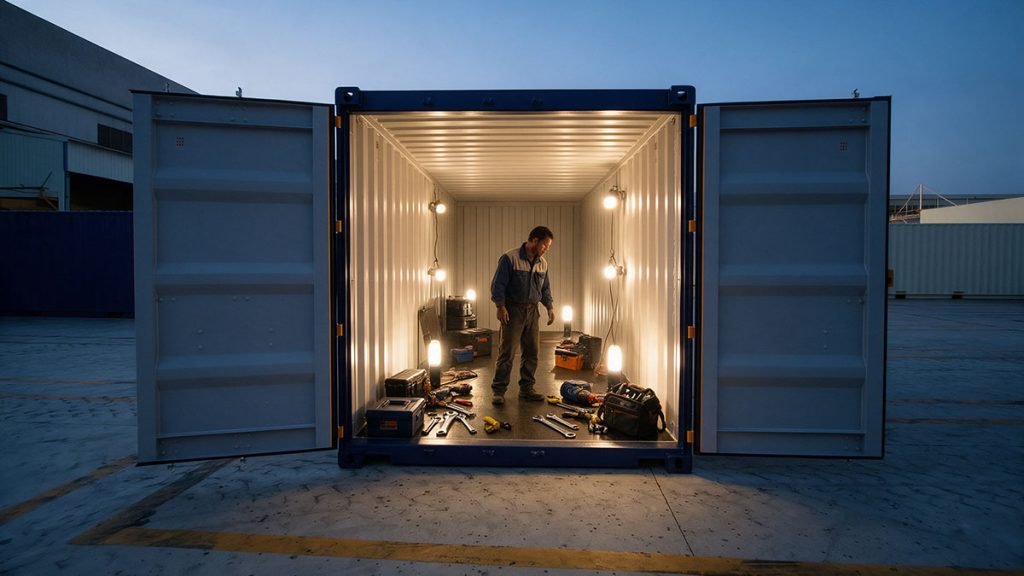
Start with the Tasks, Not the Lamp
List what people do inside the container. Occasional furniture collection, daily tool retrieval and reading small stock labels need different arrangements. Include visits after dark and situations where shelves or large objects block light from the open doors.
Walk through the proposed layout before buying equipment. Note dark corners, floor changes and areas where staff turn or carry bulky items. If the container is already loaded, assess it in that condition. An empty unit gives a misleading impression of how far one lamp will reach.
Light the Access Route as Well
Staff need to see the approach, threshold and doorway before they enter. Interior lighting alone does not address an unlit yard or loading ramp. Check whether existing site lighting covers the route and whether parked vehicles or other equipment create shadows.
The HSE’s workplace lighting guidance discusses shadows and changes in light levels. Use this as a reminder to assess the complete route, including the difference between the container interior and the area outside.
Compare Battery and Rechargeable Options
Battery-powered LED lamps can suit occasional access where charging facilities are inconvenient. Check the battery type, replacement availability and how performance changes as batteries run down. Keep replacements in an appropriate location and establish who checks them.
Rechargeable work lights can be practical for repeated visits if staff can charge them elsewhere. Look at usable runtime at the brightness you intend to use, rather than the longest advertised runtime at a lower setting. Ask how long recharging takes and whether the light can operate through your longest planned task.
Use More Than One Light Where Needed
A single bright lamp near the doors may leave the rear shelves dark. Several appropriately positioned lights can provide more useful coverage. Arrange them so people and boxes do not cast shadows over the labels being read.
Portable lamps are flexible, but they can be moved or taken away. Give each one an assigned position and identify it as container equipment. Keep a backup available if losing one light would leave someone unable to complete a task safely.
Check Mounting Before Attaching Anything
Magnetic fittings may be useful on a steel unit, but check the lamp manufacturer’s instructions and whether the surface is suitable. Make sure the light stays secure around door movement, vibration and routine handling. Do not place a heavy lamp where it could fall onto someone.
Ask the supplier before drilling, screwing, bonding or otherwise modifying a hired container. Even small cable holes or adhesive fittings can affect return conditions. A removable solution should still be assessed for secure mounting and safe removal.
Keep lights clear of opening doors, stored goods and places where they could be struck. Position controls where staff can reach them without climbing onto shelving. Our guide to organising container storage helps with the layout that lighting must serve.
Consider Damp, Dust and Temperature
Choose equipment suitable for the conditions in which it will be used. A storage container can experience dust, condensation and temperature changes even when it keeps rain out. Ask about the lamp’s environmental ratings and any limits in the instructions.
Check battery storage and operating requirements as well. Do not assume equipment intended for a warm indoor room will perform the same way in an external unit. Inspect lamps for damage and remove defective equipment from use.
Keep charging arrangements separate from general storage unless they have been properly assessed. Use the specified charger, follow instructions and deal with damaged or swollen batteries through appropriate arrangements. Do not leave improvised charging equipment running unattended inside the container.
Would Solar Lighting Work?
A solar-powered system may be an option where a suitable external panel can receive daylight and the equipment is designed for the task. Performance depends on placement, shading, weather, battery capacity and the amount of light required. A panel inside a closed steel container will not receive useful daylight.
Ask how the proposed system performs during darker months and after several poor-weather days. Check the permitted mounting arrangement and how any cable enters the unit. Do not drill the container or trap cables in its doors without an approved solution.
Treat solar lighting as a system to assess, rather than an automatic alternative to mains power. If reliable lighting is needed for long daily tasks, discuss a properly designed electrical arrangement instead of repeatedly adding temporary equipment.
Establish a Lighting Check Routine
Test the lights before entering with a load. Check charge levels, fittings and coverage, then keep the aisle and exit clear. Record faults so a weak battery or broken mount does not become everyone else’s recurring problem.
Sensor lights can be convenient, but confirm how they behave when a person stays still behind shelving. A light switching off during stock checking may be unsuitable. Check manual controls and make sure staff know what to do if lighting fails.
Emergency arrangements need separate consideration where applicable. Ordinary rechargeable lamps should not be assumed to meet any required emergency-lighting provision. Assess the intended use with a competent person when the container forms part of a workplace.
Frequently Asked Questions
Is a Phone Torch Enough for Container Storage?
It may help during a brief check, but it should not be the planned lighting for handling goods. Staff need adequate visibility and free hands for their task.
Can I Fit Permanent Lights in a Hired Container?
Only with supplier permission and a suitable design. Confirm installation and return requirements before adding fittings, wiring or openings.
How Can I Choose a Container for Regular Stock Access?
Explain the layout, access frequency and lighting needs when discussing container hire options. Contact Unit Group to ask about permitted fittings and a suitable storage arrangement.