

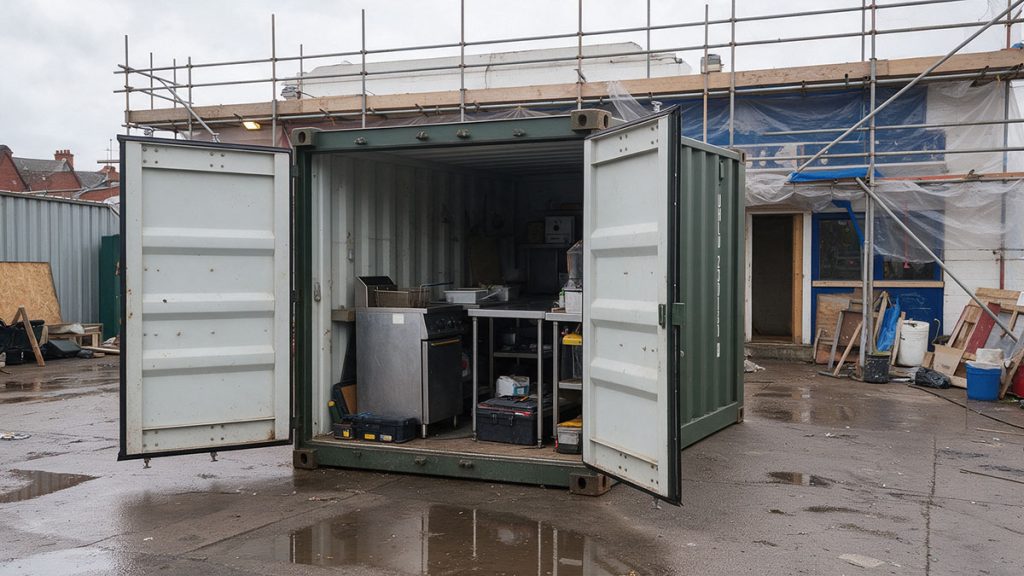
Shipping container hire in Widnes can provide temporary storage for furniture, shop fittings and business equipment during a refurbishment. Positioning a suitable unit on your premises keeps items nearby while contractors work inside. Before booking, check the storage conditions, available yard space and access for delivery and collection.
A refurbishment rarely affects every room at once. Desks may need moving before flooring starts, while shelving stays in place until the next phase. A container gives you somewhere to put those items without filling corridors, blocking working areas or repeatedly moving the same furniture between rooms.
Decide What Needs to Leave the Building
Start with a room-by-room list. Identify items that can remain safely in place, items needed each day and items that can be stored until the work finishes. Keep this list separate from the contractor’s materials schedule, so your furniture does not become mixed with building supplies.
For a Widnes shop, that might include display stands, spare shelving, counters and packaged seasonal stock. For an office, it could mean desks, chairs, filing cabinets and non-essential equipment. Mark each item with its destination room, rather than relying on staff to remember where everything belongs.
Separate Everyday Equipment from Stored Items
Keep equipment needed for trading or customer support accessible in the working part of the premises. Moving your only printer or essential payment terminal into long-term storage can create avoidable delays. Pack spare equipment separately and label boxes with both their contents and the person responsible for them.
Use the opportunity to identify items that will not return after the refurbishment. Selling, recycling or disposing of unwanted furniture before loading reduces the storage space you need. Confirm ownership before removing hired equipment or customer property.
Check Whether the Items Suit Container Storage
A standard shipping container protects against direct weather exposure when its condition is suitable, but it does not automatically control temperature or humidity. Furniture, paper records, electronics and some stock may need additional protection or a different storage environment.
Check manufacturers’ instructions for sensitive equipment. Back up business data before moving computers, and keep confidential records secured. Avoid packing damp furniture, freshly cleaned upholstery or wet materials into tightly closed boxes. Any moisture introduced at the start can remain inside throughout the hire.
Our guide to what you can store in a shipping container covers wider suitability checks. Do not include paints, solvents, gas cylinders or contractor waste in a general furniture store without agreed arrangements and a separate assessment.
Protect Furniture Without Hiding Problems
Use suitable covers and edge protection to prevent scratches during handling. Keep delicate surfaces away from sharp fittings, and avoid piling heavy boxes on upholstered seats. Check stored items periodically so damp packaging or damage can be dealt with early.
A photographed inventory is useful for items belonging to different departments or tenants. Take pictures before loading and record existing marks. This gives staff a reference when deciding whether an item needs repair before it returns to use.
Plan the Container Around Your Refurbishment Phases
Compare shipping containers available for hire against the largest items and the order in which you will retrieve them. Leave a working aisle rather than filling every gap. Furniture for the first completed room should be accessible without unloading the whole container.
For example, a small office might place chairs for the first reopening phase near the doors and spare meeting-room furniture further inside. Photograph the layout and keep a simple plan with the inventory. This helps colleagues find items even when the person who packed them is away.
Discuss expected timing with your contractor, then allow for changes. The article on short-term and long-term container hire explains duration considerations. Ask about the notice required for collection and how any extension would be charged.
Keep Delivery Separate from Customers and Contractors
At your Widnes premises, consider how a delivery vehicle would enter, manoeuvre and unload while work is under way. Shared access, parked cars, scaffolding, skips and temporary fencing can all change the available route. Send current photographs and measurements to the supplier.
Choose a position that keeps doors accessible and does not obstruct emergency routes or deliveries. The ground must suit the container and unloading method. Confirm landlord permission and any relevant planning requirements before committing to the location.
The HSE’s loading and unloading guidance explains the need to manage loading areas and keep people clear of dangerous movements. Agree a delivery window and nominate someone to coordinate access, especially if the business remains open.
Prepare for Bringing Everything Back
Do not arrange collection simply because the builders have finished their main tasks. Check that floors, decoration and cleaning are ready for furniture, and confirm any drying or curing instructions. Bringing items back too early can damage new finishes or leave staff moving them again.
Unload by room or department, using your labels and photographs. Check furniture before use and update the inventory for anything discarded or replaced. Remove your shelving, packaging and covers from the container, following the supplier’s return requirements.
Frequently Asked Questions
Can We Keep Trading During Container Delivery?
Sometimes, but only with suitable access and a clear unloading area. Agree the arrangements beforehand and separate customers from vehicle movements. An early or quieter delivery window may be more practical for a busy premises.
Can Office Computers Be Stored in a Standard Container?
Check temperature and humidity requirements first. Packaging alone does not make sensitive electronics suitable for outdoor container storage. Ask your equipment supplier and insurer before deciding, particularly for valuable systems or data-bearing devices.
What Should We Send with a Widnes Hire Enquiry?
Include your postcode, refurbishment dates, furniture list and photographs of the proposed position. Contact Unit Group to discuss a suitable unit, delivery access and a quote covering hire and collection.