

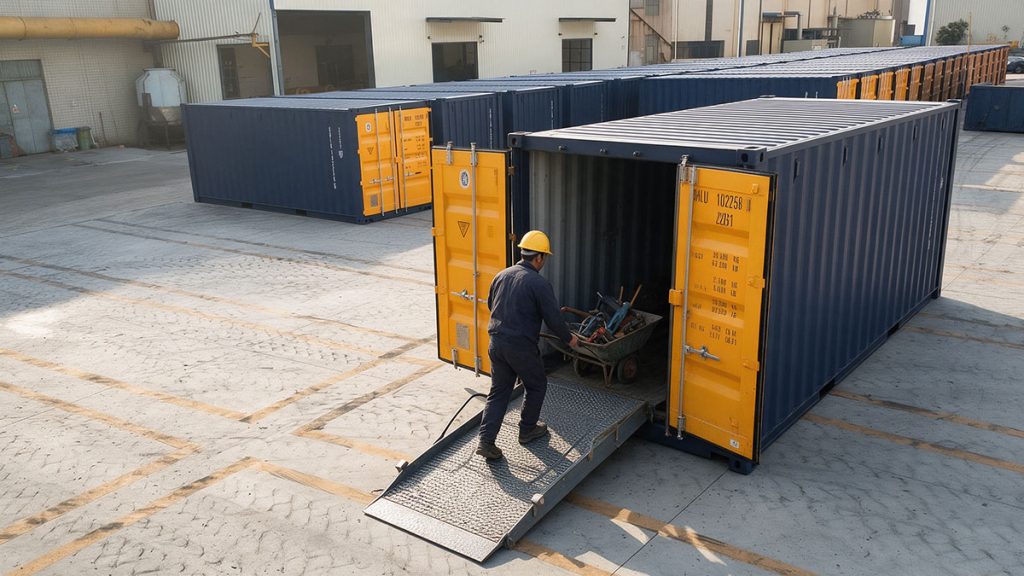
A shipping container loading ramp must suit the container doorway, the equipment using it and the ground beneath it. Check the threshold height, usable width, rated capacity and securing method before choosing a ramp. A product that fits the opening is not automatically suitable for a loaded pallet truck or other handling equipment.
The purpose is to create a controlled route into the unit, not just bridge a visible step. Loads, wheels and people all behave differently on a slope. Start by describing the full loading task, then ask the ramp supplier and container supplier to confirm compatibility.
Measure the Doorway and Approach
Measure the actual difference between the approach surface and the container floor. Container positioning and ground levels affect this measurement, so a nominal container size is not enough. Check the threshold shape, door clearance and usable opening with doors secured as instructed.
Also measure the space outside. A longer ramp needs more approach room, and equipment may need turning space before reaching it. Include parked vehicles, fences and other obstacles that could make a straight approach difficult.
Check the Transition at Each End
Look at how equipment will cross from the ground onto the ramp and from the ramp into the container. Small wheels and low-clearance equipment may catch on an abrupt edge. A loaded pallet truck can behave differently from an empty one.
Ask the ramp manufacturer about the equipment’s clearance and wheel arrangement. Do not rely on photographs or a description such as heavy duty. Confirm that the whole route is suitable for the intended task.
Understand the Rated Capacity
Request the ramp’s stated load rating and the conditions under which it applies. Explain the combined weight of goods and equipment, plus the operator where relevant. Check whether the rating addresses the wheel loads and movement involved, rather than only a total evenly spread weight.
The ramp’s capacity is only one part of the assessment. Confirm the container floor’s suitability and the approach surface as well. A strong ramp does not make an unsuitable floor or damaged loading area safe.
Describe the Handling Equipment Accurately
Tell the supplier whether you use a trolley, manual pallet truck, powered equipment or another aid. Give the make, model and relevant operating information where available. Ask the equipment manufacturer about permitted slopes and braking arrangements.
Do not assume forklift access is acceptable simply because a ramp exists. Vehicle entry needs separate approval covering the ramp, unit, loads, manoeuvring space and operating conditions. Some storage tasks are better handled by keeping powered vehicles outside.
Choose a Width and Gradient for the Task
The usable width needs to accommodate the equipment and any load overhang. Consider how an operator maintains control and whether there is adequate clearance throughout the movement. Avoid a route that requires squeezing alongside a loaded trolley.
Ramp length affects the gradient, but there is no single safe angle for every task. The suitable arrangement depends on the equipment, load, traction and working method. Ask for a task-specific recommendation rather than selecting the shortest ramp that reaches the floor.
The HSE’s manual handling guidance explains the need to avoid hazardous handling where possible and assess remaining tasks. A ramp should form part of that assessment, including pushing, pulling and controlling loads.
Check Ground Conditions and Securing Arrangements
The ramp needs suitable support on a surface that can carry the intended loads. Loose gravel, uneven paving, mud or soft ground can affect stability and traction. Check how conditions change after rain or when vehicles have damaged the approach.
Follow the manufacturer’s method for securing or positioning the ramp. Do not substitute loose blocks or improvised fixings. Ask the container supplier before attaching anything to a hired unit, even if a fixing appears temporary.
Inspect contact points and make sure doors cannot interfere with use. Keep the ramp from obstructing nearby routes, and agree how it will be removed or secured when not in use. Its storage position should not create a new trip hazard.
Consider Grip, Weather and Visibility
Ask what surface is suitable for the intended footwear and wheels. Wet conditions, mud and debris can reduce grip. Arrange cleaning and inspection before use rather than assuming a textured surface will remain effective in every situation.
Lighting should make the ramp, threshold and approach clearly visible. Avoid strong shadows hiding edges. If loading takes place after dark, assess the entire route from the vehicle or store to the container, not just the interior.
For awkward loading arrangements, compare available container types and sizes before committing to a layout. Choosing a different position or access arrangement may be more practical than adding a ramp to an unsuitable route.
Agree Inspection and User Instructions
Check the ramp before use for damage, loose parts and contamination, following the manufacturer’s inspection requirements. Remove it from service if its condition is uncertain. Repairs should follow approved instructions, rather than being improvised on site.
Explain the permitted equipment and loading method to everyone using it. Set clear rules for keeping people away from moving loads and for stopping when conditions change. Keep the manufacturer’s documentation accessible to the person supervising storage.
Frequently Asked Questions
Can Any Pallet Truck Use a Container Ramp?
No. Confirm wheel clearance, load, gradient and control requirements with the equipment and ramp suppliers. A manual pallet truck should not be assumed suitable for an inclined route.
Can I Make a Ramp from Timber Boards?
Do not improvise a loading ramp without a competent design and assessment. Purpose-made equipment still needs checking against the specific task, unit and ground conditions.
What Details Should I Provide When Enquiring?
Send threshold measurements, photographs, load information and the equipment details. Contact Unit Group to discuss the container arrangement and coordinate compatibility checks with your ramp supplier.