

Shipping container stock control works best when every item has a recorded location, every movement is logged and physical counts are checked against the records. You do not need a complicated system to start. Clear labels, consistent item codes and a simple process used by everyone are more useful than an impressive inventory file nobody updates.
This matters whether the container holds spare parts, retail stock or equipment. Without reliable records, staff may reorder goods that are already available, promise stock that has been used or spend time searching through unlabelled boxes. Build the recording method before loading, then keep it part of everyday work.
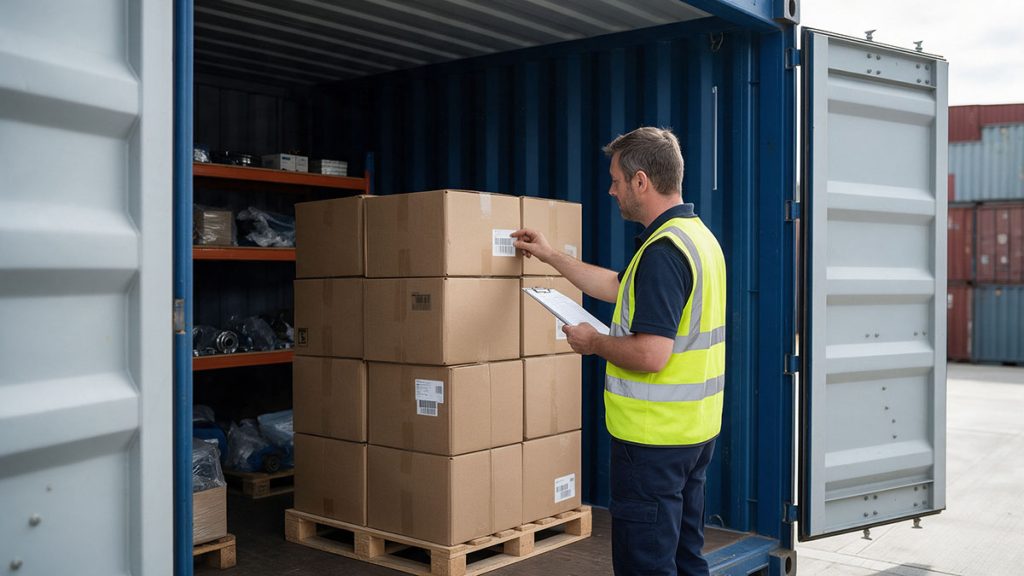
Decide What Your Inventory Needs to Record
Begin with a list of item descriptions, codes, quantities and storage locations. Record the unit of measure clearly: a box, pack and individual item are not interchangeable. Include ownership if you store customer property or goods belonging to more than one business.
Add batch numbers, expiry dates or serial numbers where they matter to your operation. Do not collect details merely because there is space in a spreadsheet. Choose fields that help staff identify, count and retrieve the goods correctly.
Distinguish Stock from Equipment
Consumable stock is usually recorded by quantity. Reusable tools and equipment may need individual references, condition notes and a borrowing record. Keep those processes separate so a returned drill is not treated like another pack of screws.
For valuable equipment, photographs and serial numbers can support identification. Record who is responsible for updating the list when something is repaired, replaced or written off. Keep copies of records somewhere other than the container.
Give Each Storage Position a Clear Code
Create location codes that describe a specific shelf, bay or floor position. Use the same format throughout the unit and display it where staff can see it. Avoid vague entries such as at the back or near the door, particularly when the layout changes.
For example, a code can identify a shelving bay and level without depending on the product stored there. This means you can move an item to a different position while retaining its item reference. Keep location codes and product codes as separate fields.
Design Labels for Real Conditions
Use readable text and labels that suit the packaging and storage environment. Make the item description and location clear without filling the label with unnecessary detail. Place labels consistently so people can read them without turning every box around.
Do not rely on colour alone. Clear wording helps new staff, temporary workers and anyone unfamiliar with your system. Replace damaged labels promptly and remove obsolete ones when stock moves, otherwise the container may display two conflicting sets of instructions.
Choose a Recording System Staff Can Maintain
A shared spreadsheet can suit a small operation if access and updates are controlled. An inventory application may help where several people pick stock or where scanning is useful. Choose based on your workflow rather than assuming software will fix poor recording habits.
Check how records will be accessed at the container. Mobile reception and connectivity may be unreliable inside a steel unit. If staff use paper or an offline process, agree who transfers updates and when. Avoid separate lists that gradually drift apart.
Our guide to container organisation covers the physical layout. Stock control adds the record of what is there, who moved it and how much remains.
Record Goods In, Goods Out and Transfers
Check deliveries before putting them away. Compare quantities with the order and record damage or shortages. Update the inventory when goods enter their allocated position, not at some undefined point later in the week.
Record withdrawals at the time of picking wherever practical. Include the item, quantity, date and job or order reference. If goods move between the container and another store, log the transfer at both ends so the same stock is not counted twice.
Keep Returns and Unchecked Goods Separate
Allocate a clearly marked place for returns awaiting inspection. Goods should not become available stock again until someone checks their condition and quantity. This avoids reselling damaged products or assuming returned equipment is ready for use.
Set aside discrepancies for review rather than forcing the numbers to match. A difference might come from a pack-size error, unrecorded movement or incorrect location. Record the reason for any adjustment so repeated problems can be identified.
Count Stock Without Losing Control of Movements
Plan stocktakes for a time when access can be controlled. If stock continues moving during the count, use a defined method to record those movements. Otherwise, an accurate count can become outdated before it reaches the spreadsheet.
Count one area at a time and mark completed locations. Check empty positions as well as full shelves. Where practical, have a second person verify important differences before adjusting the record. Search for misplaced goods before deciding they are missing.
Smaller rolling counts can be useful between full stocktakes. Prioritise frequently used, valuable or problem items, and track whether discrepancies keep recurring. The purpose is to find weaknesses in the process, not simply produce a correct number on one day.
Keep Counting and Picking Safe
Do not climb on shelves or unstable boxes to read labels. Arrange stock so routine checking can be done with appropriate access equipment and a clear aisle. Heavy or awkward items need a handling plan rather than an improvised lift during stocktake.
The HSE’s warehousing and storage safety guide is a useful reference for storage and handling arrangements. Review your layout when stock volumes change, since a clear aisle at the start can become blocked during a busy period.
Choose capacity from the working layout, not only the volume of goods. Compare containers for hire with enough room for access, checking and safe retrieval.
Frequently Asked Questions
Is a Spreadsheet Enough for Container Stock Control?
It can be, provided everyone follows the same recording process and one current version is maintained. Larger or busier operations may need a system that handles simultaneous updates.
How Often Should We Count Stock?
Choose a schedule based on value, movement and previous discrepancies. Count problem items more often and review the routine when stock volumes or staffing change.
What Should We Explain Before Hiring a Stock Container?
Describe the goods, shelf layout, picking frequency and access needs. Speak to Unit Group about the storage unit, then establish your inventory process before the first delivery is loaded.